

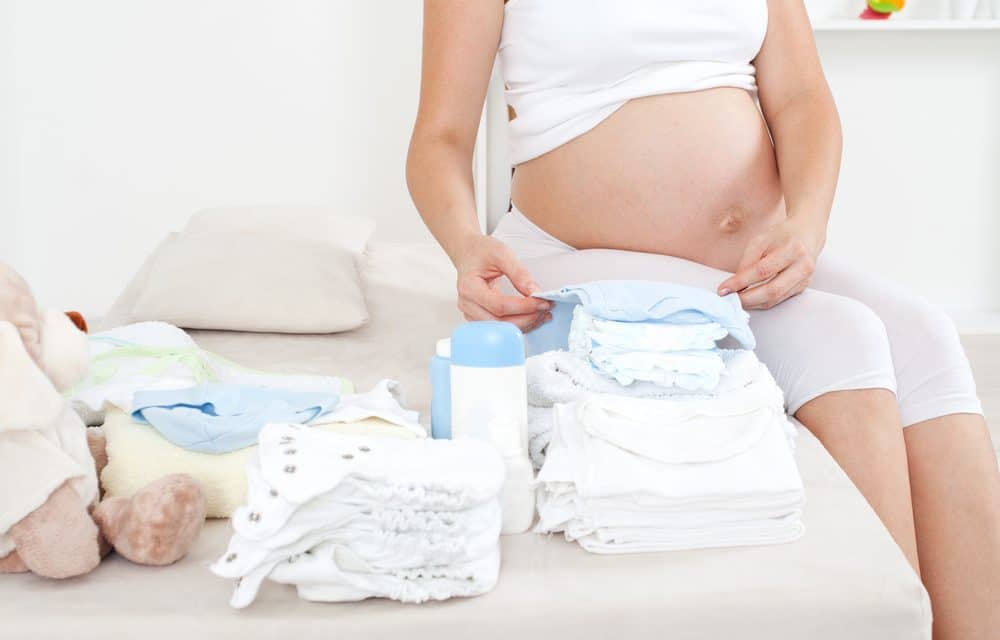
Have you got everything ready? It’s the typical question everyone asks as your due date approaches. If you’re well prepared, the answer may be yes. But if you still haven’t started “packing your maternity bag” and have no idea what a romper or a swaddle blanket is, don’t worry! This post will help you get up to speed.
Let’s start from the beginning: “packing the maternity bag” means preparing the baby’s hospital bag and making sure it includes everything they may need during their first days of life. If you “browse around” the Internet, you’ll find more than one checklist. In fact, some specialised baby brands even provide glossaries on their websites to help parents understand the terminology used for newborn clothing and accessories. This is certainly helpful because, if you’re a first-time mother, there are probably terms you’ve never heard before. Seriously. For example, do you know what a doudou is, or what mittens are used for? A doudou is a soft comfort toy that is often given as a gift and placed in the baby’s cot, while mittens are small gloves used to prevent babies from scratching themselves if their nails are very long. Neither of these items is essential, so don’t take everything you see on checklists at face value.
General Considerations
- Adapting to the weather: the hospital temperature is usually stable thanks to heating or air conditioning. However, it is advisable to take the season of the year into account when choosing clothing.
- Spare clothing: bring extra changes of clothes for the baby, as nappy changes and possible spit-ups can soil their clothes.
- Indicative checklist: this list is intended as a guide; adapt it according to your preferences and needs.
FOR THE BABY
Delivery Room
- A cotton hat: it will help regulate your baby’s temperature. At Dexeus University Hospital, it is provided free of charge.
- A swaddle blanket or muslin cloth: to cover your baby while you enjoy skin-to-skin contact.
Note: please bear in mind that these clothes may get stained, so it is not recommended to use items that are particularly precious or sentimental to you.
Hospital Stay
- 4 two-piece underwear sets: wrapover shirts and nappy covers or bloomers (a type of very soft, seamless underwear that does not put pressure on the baby’s legs and is worn over the nappy). As for the first outfit shirts (the term used for a newborn’s very first clothes), they should be made of 100% cotton and be easy to put on and take off. They should also be washed before first use with a mild detergent specifically designed for baby clothes, and you should check that they do not have labels or seams that could cause chafing or damage the baby’s delicate skin.
- If it is winter and you prefer to use bodysuits, they should also be made of 100% cotton. Make sure they have a wide neck opening so that they can be put on and taken off easily. They should also be washed before being worn for the first time.
- 1 pack of nappies: absolutely essential! Choose the smallest size, usually size 1. Our hospital provides them, but it is always a good idea to have some extras on hand.
- 2 blankets or swaddle blankets (another useful term to add to your list!). They are used to keep babies warm and snug when you want them to relax or fall asleep. In summer or during mild weather, you can use a muslin cloth, a lightweight square piece of fabric, usually made of fine cotton, that serves the same purpose. It is not advisable to overdress babies, as their body temperature is similar to ours.
- 1-2 cotton hats: newborns do not regulate their temperature well and can lose heat easily through their head and feet. You will not need them in the hospital room, but your baby will need one when leaving the hospital, especially during winter.
- 4 footed trousers: these can be worn as bottoms with the first outfit sets. You can combine them with the shirts and alternate them with bloomers if the weather is colder.
- 1 pair of baby mittens: to prevent the baby from scratching themselves. However, current recommendations advise against using them routinely, as newborns should be able to explore and experience their sense of touch. If their nails are long, they can be gently filed with the help of healthcare staff.
- 2 footed bodysuit-style sleepsuits: choose ones that are easy to put on and take off (like all baby clothing) and that fasten with Velcro. Avoid zips and buttons that could come loose.
- Cotton socks: 2 or 3 pairs (thicker or thinner depending on the season).
Baby Toiletry Bag
- 1 soft baby brush: in case your baby has lots of hair… or very messy hair! Some babies are born with hardly any hair at all, but it’s always useful to have one just in case.
- Neutral pH soap specially formulated for babies: please note that the Spanish Association of Paediatrics (AEP) does not recommend bathing newborns before they are 7-10 days old.
- Saline solution (single-dose vials). At Dexeus University Hospital, it is provided free of charge.
- Natural fibre sponge: for cleaning your baby with soap and water during nappy changes. Wet wipes are very practical, but they should not be used on a daily basis, only occasionally, as they may irritate the baby’s skin.
Not Recommended to Bring…
- Lanolin creams, Purelan or similar products: if you experience discomfort or cracked nipples, these creams will not cure the problem. Seek advice from a healthcare professional specialising in breastfeeding. You can learn more during pregnancy through books or by consulting a lactation specialist.
- Baby fragrances or colognes: they contain alcohol and fragrances that may irritate the baby’s skin.
- Pacifier: its use is not recommended during the first month of life. In any case, this is a personal decision.
- Toys: they take up space and your baby will not use them while in hospital.
- Shoes: they are adorable, but unnecessary. Socks are a much better option.
FOR THE MOTHER
For the Period Before and During Labour
- Documents: ID card/passport, health insurance card, family record book (if you have one), and all pregnancy-related documentation, including your birth plan.
- Personal items: hair ties, lip balm (to help keep your lips hydrated and prevent dryness, which is common due to mouth breathing during labour), and any other items that help you feel comfortable.
- Playlist or relaxing music: prepare a playlist with songs you enjoy or that help you relax. You may also bring essential oils or an object that serves as an emotional anchor.
- Light snacks and water..
For the Hospital Stay
- Mobile phone and charger.
- Nightgowns, pyjamas, or comfortable clothing (3-4 items): preferably with buttons or front openings to facilitate breastfeeding.
- Nursing bras (3-4 units): comfortable and preferably without underwiring.
- Dressing gown.
- Postpartum maternity pads (2 packs): made of cotton or natural fibres. At Dexeus University Hospital, they are provided free of charge.
- Disposable underwear: very practical after childbirth. Alternatively, you may choose high-waisted cotton underwear. Mesh underwear is preferable to paper versions.
- Slippers and flip-flops for the shower. Flip-flops are also particularly useful for the delivery room and during the dilation phase of labour.
- Personal toiletry bag: include your usual toiletries and hygiene products (toothbrush and toothpaste, shower gel, shampoo, moisturiser, hairbrush or comb, etc.).
- Comfortable clothes for leaving the hospital.
PRACTICAL TIPS:
- Administrative procedures: don’t forget your family record book and the birth declaration report that will be provided by the hospital. You will need these documents to register your baby with the Civil Registry. This process can be completed electronically and free of charge at the hospital by booking an appointment at the main reception desk. As for other procedures (maternity leave, maternity and paternity benefits, applications for financial support, etc.), you can leave them in the hands of professionals Birth Registration Services Barcelona can take care of everything for you.
- Baby transport: a reclining infant car seat (if travelling by car) or a baby carrier/backpack or sling (if walking) to transport your baby safely when leaving the hospital.
- Earrings: some hospitals offer ear piercing for newborns. If you would like your baby to have earrings fitted, check directly with your hospital. Dexeus University Hospital provides the earrings, whereas at Hospital General de Catalunya the family must bring the earrings to be used.
- Shop wisely: although the excitement may be great, think twice before buying accessories and extras; many items end up never being used.
- Organisation: prepare two separate bags, a small one containing the essentials for labour and delivery, and a larger one with everything else. You can also label the baby’s outfits and store them in individual bags to keep everything neatly organised.
- Placenta printing: this service can be provided at the family’s request, provided that activity in the delivery room allows it (the care of the mother and baby is always the priority). You may bring a sheet of card or, preferably, a canvas. If you would like to use specific colours, we recommend bringing your own paints, as only paints donated by other families are available in the delivery room.
As you can see, in the end it is mostly a matter of common sense, so try not to worry too much about whether you have everything or if you might be forgetting something. Besides, if you do happen to be missing anything, you can always ask your partner, family members, or friends to bring you whatever you need. Relax! The big moment is almost here, and what truly matters is that you are about to meet your baby very soon.