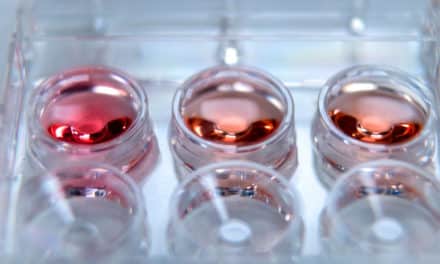


For years, testosterone has been a strategy recommended by some specialists in IVF treatments to improve outcomes for women with low ovarian reserve. However, a clinical study led by Dexeus Mujer and published in Nature Communications in 2026 shows that testosterone does not improve pregnancy rates in IVF.
If you are considering fertility treatment and have been advised to use testosterone before ovarian stimulation, this article is for you.
As reported by La Vanguardia, this finding has significant implications for women seeking fertility treatment.
What is low ovarian reserve and how does it affect fertility?
Low ovarian reserve means that the number of eggs available in the ovaries is lower than expected for your age. This condition can directly affect:
- The response to ovarian stimulation treatments
- The chances of achieving a pregnancy through IVF
- The quantity and quality of eggs retrieved
Many women with this condition seek options to improve their outcomes. One of the most widely studied strategies has been the use of transdermal testosterone prior to starting the IVF cycle.
Testosterone and female fertility: why was it thought to work?
Although testosterone levels are lower in women than in men, this hormone plays important roles in the female body. The ovaries produce testosterone naturally.
Theory behind the treatment:
- Some studies suggested that testosterone might promote the development of ovarian follicles
- It was thought to improve the response to hormonal stimulation
- It might increase the number of mature eggs retrieved
However, most of these studies had methodological limitations and did not demonstrate actual efficacy. Despite this, many specialists continued to recommend its use.
Dexeus study: testosterone in IVF does not improve pregnancy rates
To resolve this uncertainty, Dexeus Mujer led the most rigorous study to date on the use of testosterone prior to IVF.
Clinical trial data
| Characteristic | Details |
| Type | Randomised, triple-blind, placebo-controlled clinical trial |
| Participants | 288 women with low ovarian reserve |
| Age | 18-43 years |
| Centres | 10 clinics in Spain, Belgium, Denmark and Switzerland |
| Treatment | Testosterone gel 5.5 mg/day for 9 weeks |
| Publication | Nature Communications (February 2026) |
| Principal investigator | Dr. Nikolaos Polyzos (Dexeus Mujer) |
Results: Testosterone does NOT increase pregnancy rates in IVF
Transdermal testosterone does not improve IVF outcomes. The Dexeus Mujer study involving 288 women showed pregnancy rates of 15.7% with testosterone compared to 14.9% with placebo, a difference that was not statistically significant (p=0.86).
Study conclusions
The authors conclude that:
- The routine use of testosterone in IVF is not justified
- It does not improve reproductive outcomes in women with low ovarian reserve
- Its use unnecessarily delays the start of treatment (by 9 weeks)
- The scientific community should seek other effective strategies
What does this mean for you if you are planning to undergo IVF?
What you should know before your fertility treatment
If testosterone has been recommended to you before IVF:
- Ask your specialist for the scientific evidence supporting that recommendation
- This study shows that there is no proven benefit
- Using testosterone means delaying the start of your treatment by 9 weeks
If you have low ovarian reserve:
- This does not mean you cannot achieve a pregnancy
- It requires a personalised and realistic strategy
- There are other options with stronger scientific backing
Dexeus Mujer’s commitment to research
At Dexeus Mujer, we continuously conduct clinical studies with the aim of:
- To offer more effective and safer treatments
- To reduce the physical, emotional and financial strain on patients
- To base all recommendations on sound scientific evidence
This study, published in a prestigious international journal, benefits all women who require IVF treatment, not just Dexeus patients.
Frequently asked questions about testosterone and IVF
Does testosterone improve IVF outcomes?
No. The most rigorous study to date, published in Nature Communications (2026) and led by Dexeus Mujer, shows that transdermal testosterone does not improve pregnancy rates in women with low ovarian reserve. The results were 15.7% versus 14.9%, with no significant difference.
What is low ovarian reserve?
Low ovarian reserve indicates that the number of eggs available in the ovaries is lower than expected for the woman’s age. It can affect the response to ovarian stimulation and the chances of pregnancy through IVF. It is diagnosed using AMH testing and antral follicle count.
Can I get pregnant with low ovarian reserve?
Yes. Having low ovarian reserve does not prevent pregnancy, but it requires a personalised strategy. At Dexeus Mujer, we assess each case individually to determine the best treatment: IVF using your own eggs, oocyte banking or egg donation.
Should I use testosterone before my IVF?
According to current scientific evidence, there is no justification for the routine use of transdermal testosterone before IVF in women with diminished ovarian reserve. Its use merely delays the start of treatment by 9 weeks without providing any benefits.
What does it mean for a study to be triple-blind?
A triple-blind design means that neither the patients, nor the doctors treating them, nor the researchers analysing the results know who is receiving the active treatment and who is receiving the placebo. This design is the most rigorous in clinical research because it eliminates conscious and unconscious biases that could affect the results. It is the gold standard for establishing causal relationships with a high degree of certainty.
Are there effective alternatives for women with low ovarian reserve?
Yes. Although diminished ovarian reserve presents a challenge, there are scientifically supported strategies:
- Individualised stimulation protocols based on your ovarian response
- Accumulation of oocytes over several cycles
- Advanced embryo selection techniques with pre-implantation genetic diagnosis
- Egg donation in appropriate cases
The optimal approach depends on each individual situation and must be assessed by a specialist in reproductive medicine.
About the study’s author
Dr. Nikolaos Polyzos
President of the Dexeus Mujer Foundation – Scientific Director of Dexeus Mujer
Specialist in Reproductive Medicine (MD, PhD) with over 120 scientific publications in international journals. Expert in fertility treatments for women with low ovarian reserve.
Find out more about Dr Polyzos
Scientific references
- Polyzos NP, et al. “Transdermal testosterone pretreatment in women with diminished ovarian reserve undergoing IVF: a randomized, triple-blind, placebo-controlled trial.” Nature Communications. 2026 Feb 16.
- Ferraretti AP, et al. “ESHRE consensus on the definition of ‘poor response’ to ovarian stimulation for in vitro fertilization: the Bologna criteria.” Human Reproduction. 2011.
Dexeus Mujer · Barcelona · Tel. +34 93 227 47 00 · en.dexeus.com